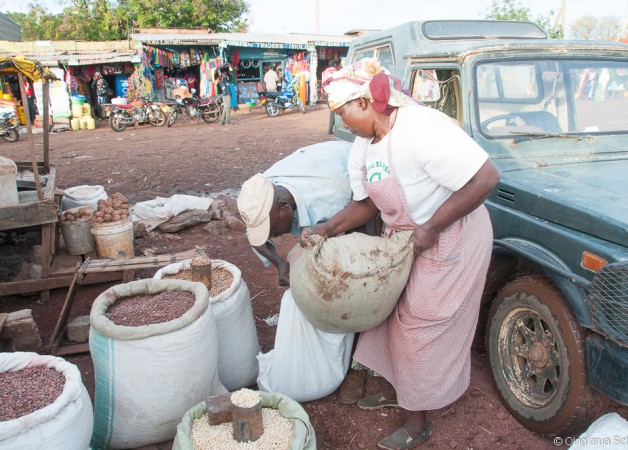
We took more food out to the school this weekend. When children are not at school they work. Most of them, boys and girls, herd livestock, some of them help at home fetching water or firewood and looking after the babies and toddlers. Many children in the area don’t attend school at all, but even …
We are feeding all the children in the community from the Olng’arua School kitchen, weekdays, weekend and holiday, during this hard drought. The amazing cooks produce rice, beans and greens for up to a hundred every lunch time in this tiny little mud walled kitchen. The kids don’t mind where it comes from though, they …
Thanks to all the wonderful people who have sent donations I’ve been out buying sacks of beans and rice, also cabbage, carrots, tomatoes and onion. Oh, and a big pot to help with the additional cooking. We are now able to provide a free lunch to ALL the children in the community. The message is …
It it so sad to see a hungry child set aside half of their own lunch and secretly put it into a bag to take home to their brothers and sisters who have nothing to eat. That is what we have been seeing happen at our school for the last week. Conditions are very bad …
Baby goats are endlessly curious, and these three were no exception. Given half a chance I think they would have happily munched through several text books and a few pencils, all in the name of investigation…. something we like to encourage in most of our kids, but perhaps not these ones!
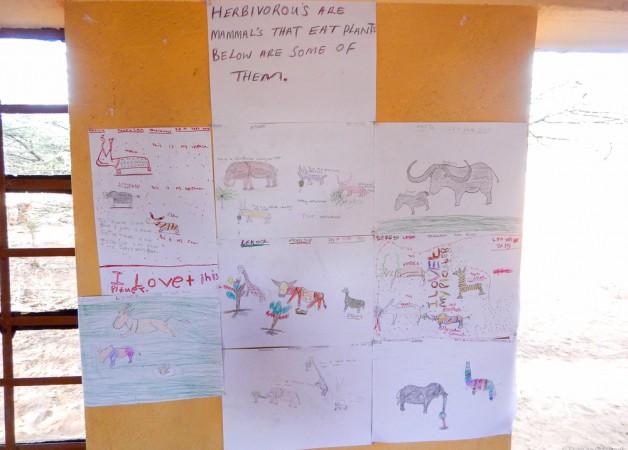
Some of the children have been learning about herbivores and put up a small display about it.
At the end of the day everybody at Olng’arua School comes together for a short meeting. Each evening a different child runs the meeting and asks the others, children and adults, what was good or bad about their day. Anybody can speak, or not, as they feel like. Some tell of the good things they …
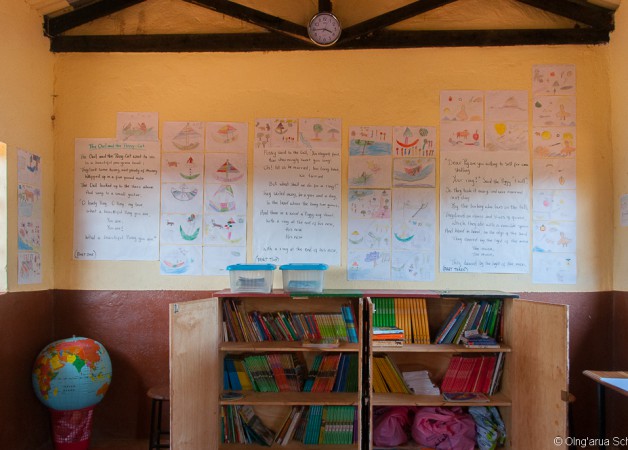
The Owl and the Pussy Cat by Edward Lear proved to be very popular in this English class. Just what is a runcible spoon?
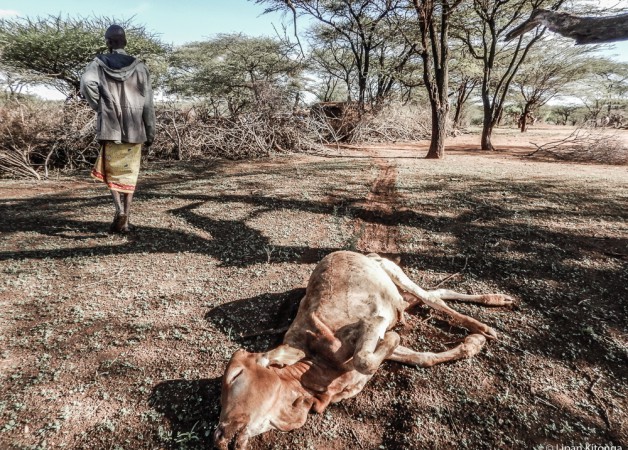
For most of northern Kenya the long rains aren’t actually any longer than the short rains. This year the long rains (arriving somewhere from late March and rarely staying beyond the first week in May) have been looked for with more than the normal amount of anxious anticipation. Across the north the short rains (usually …
Today we have been making hats!